LAW ENFORCEMENT
Instructor: Mr. Tommy Johnson
Visit the Teacher WebsitePrepare to Serve, Protect, and Lead
Could you stay calm, think clearly, and make the right call when others are counting on you? Law Enforcement places students in realistic scenarios that reveal the judgment, teamwork, and responsibility behind careers in public safety. Whether you already have a career goal in mind or are beginning to explore the field, this program gives you the opportunity to challenge yourself and discover what it takes to serve others with integrity.
Law Enforcement is a one-year program with 20 total spots available each year across Berea, Carolina, Travelers Rest, and Wade Hampton High Schools. Open to rising 10th-, 11th-, and 12th-grade students, the program includes the full Law Enforcement 1 and 2 sequence. Choosing the program means committing to the full school year and making the most of this limited opportunity.
What Students Learn
Students build practical public-safety skills while developing the judgment, communication, teamwork, and professional habits expected in law enforcement and related careers.
- Explore law enforcement: Learn how policing, corrections, security, emergency communications, and other public-safety agencies serve their communities.
- Apply law and ethics: Examine criminal law, constitutional principles, professional conduct, accountability, and ethical decision-making.
- Communicate professionally: Practice listening, interviewing, report writing, teamwork, community relations, and de-escalation.
- Investigate and respond: Follow introductory procedures for crime scenes, evidence awareness, investigations, emergency response, and incident management.
- Train through realistic scenarios: Apply officer-safety fundamentals, defensive tactics, careful observation, communication, and responsible decision-making during supervised exercises.
Is This Program Right for You?
Students should be ready to:
- Commit to completing both semesters
- Attend regularly and arrive prepared
- Participate in physical activities and realistic training scenarios
- Follow safety procedures and professional expectations
- Communicate respectfully and work as part of a team
- Accept feedback and make responsible decisions
These habits help students complete the one-year sequence, earn certifications, and prepare for future education, training, and public-safety opportunities.
Your One-Year Law Enforcement Pathway
The program is one connected school-year experience. First semester builds the foundation students need before they move into more applied training and scenario-based work during second semester.
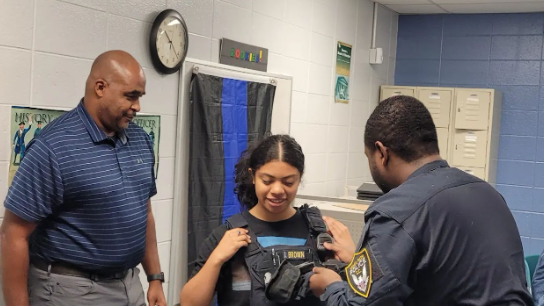
Semester 1 | Building the Foundation
Students begin with the principles, professional expectations, and communication skills that support responsible work in law enforcement and public safety.
Students focus on:
- Exploring the history, structure, roles, and responsibilities of law enforcement agencies
- Examining constitutional principles, criminal law, ethics, professionalism, and accountability
- Practicing communication, observation, note-taking, report writing, and community relations
- Learning foundational officer-safety, emergency-response, and incident-management procedures
- Developing teamwork, discipline, physical readiness, and sound decision-making
Semester 2 | Applying Public-Safety Skills
Students build on first-semester knowledge through practical exercises, team challenges, and supervised scenarios that require clear communication, careful observation, and responsible action.
Students focus on:
- Applying crime-scene, evidence-awareness, investigation, and documentation procedures
- Using communication and de-escalation strategies during realistic scenarios
- Practicing defensive-tactics and officer-safety fundamentals in supervised training
- Responding to emergency and incident-management situations as part of a team
- Connecting completed training and certifications to future public-safety pathways
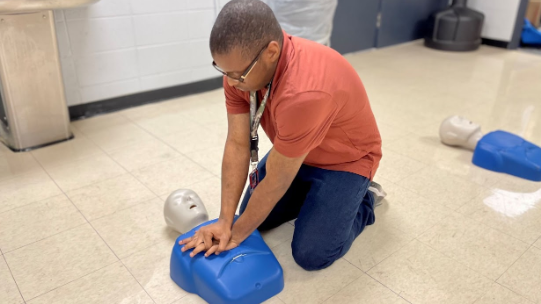
Work-Based Learning
Eligible students may be recommended for Work-Based Learning opportunities that connect classroom instruction with professional communication, public service, security, and workplace expectations. Available experiences depend on employer needs, student eligibility, scheduling, and the duties appropriate for a high school student.
Placement is not guaranteed. Students must meet school eligibility requirements, and each sponsoring organization may establish additional expectations related to age, experience, certifications, attendance, background requirements, and workplace readiness.
Industry Certifications
Students may pursue industry-recognized credentials as they progress through the one-year program:
- Tier 1: OSHA 10-Hour, Stop the Bleed, and IS-907 Active Shooter: What You Can Do
- Tier 2: First Aid, CPR and AED, and YouScience Criminal Justice 1
- Tier 3: National Incident Management System credentials and YouScience Criminal Justice 2


Career Opportunities
Law Enforcement can provide a foundation for careers in policing, corrections, military service, private security, emergency communications, investigations, and public safety. Most sworn positions require additional education, academy training, background screening, and age or eligibility requirements.
Police
Officer
Police officers patrol communities, respond to calls, investigate incidents, enforce laws, prepare reports, assist residents, and work with other agencies to protect public safety. Academy training and state certification are required.
Corrections
Officer
Corrections officers maintain safety and security in detention and correctional facilities. They supervise individuals in custody, enforce rules, conduct searches, document activity, and support safe facility operations.
Military
Police
Military police support security, law enforcement, investigations, traffic control, detention operations, and protection of military personnel and facilities. Requirements and training vary by service branch.
Emergency
Dispatcher
Emergency dispatchers receive calls for assistance, gather critical information, provide instructions, dispatch responders, monitor radio traffic, and coordinate communication among public-safety agencies.

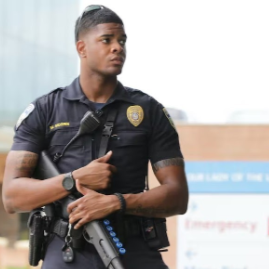
Visit the Program
Students can explore the Law Enforcement classroom and training areas and meet Mr. Johnson during scheduled school tours. Students and parents are also invited to visit during Enoree's Fall Recruiting Open House and Lab-or-Treat in late October or our Spring Recruiting Open House in March. Visit the front page of our website or follow us on social media for event details as they become available.
A visit provides a closer look at the hands-on training, practical scenarios, equipment, certifications, and opportunities available during the one-year program. It also gives families an opportunity to ask questions about the student's interest, schedule, transportation, attendance, physical participation, and readiness to complete both semesters.
Local Work-Based Learning Partners
Community organizations and employers help eligible students connect classroom instruction with professional communication, public service, security, and workplace expectations.


One-year commitment note: Law Enforcement is designed as one connected school-year experience. First semester builds the foundation students need for the applied training, certifications, and scenario-based learning offered during second semester. Accepting a place in the program should mean planning to complete both semesters.
Work-Based Learning note: Work-Based Learning is a culminating goal of each program, giving eligible students the opportunity to apply their technical skills in a real workplace. Placement is not guaranteed and must be earned by meeting program, school, and employer expectations. When available, Work-Based Learning may include paid on-the-job training and may lead to employment, tuition assistance, industry certifications, or continued education opportunities.
Graduation and college admission note: Students earn four high school credits by completing the full one-year program. These credits count toward South Carolina high school graduation requirements as applicable, and one credit may fulfill the state’s World Language or Career and Technology Elective requirement. Career center coursework generally does not replace the world-language coursework required for admission to four-year colleges and universities. Because graduation and college admission requirements may vary, students and families should work with both their home high school counselor and the Enoree Career Center counselor to ensure the student’s career center program, graduation plan, and future education goals remain aligned.