GRAPHIC COMMUNICATIONS
Design. Produce. Communicate.
Want to turn your ideas into designs and products people can actually see and use? Graphic Communications moves you beyond a traditional classroom and into a creative production environment, where art and technology come together for real clients and audiences. Whether you already enjoy designing and creating or are ready to explore something new, this program gives you a place to develop your creativity and start building your future.
Graphic Communications is a two-year program with 20 total spots available each year across Berea, Carolina, Travelers Rest, and Wade Hampton High Schools. All four semester courses earn honors credit, and choosing the program means planning to complete both years and make the most of this limited opportunity.
What Students Learn
Students develop practical design and production skills while building a technical foundation for future education and careers in graphic communications and the creative economy.
- Create visual designs: Apply typography, color, layout, illustration, and design principles to communicate with specific audiences.
- Edit digital images: Capture, organize, correct, retouch, combine, and prepare photographs and graphics for different uses.
- Build professional files: Use Illustrator, Photoshop, and InDesign to create artwork, publications, and client-ready production files.
- Produce printed products: Prepare, print, finish, bind, mount, cut, and evaluate work using commercial production processes.
- Manage creative projects: Interpret client needs, plan workflows, meet deadlines, revise from feedback, and present finished work.
Is This Program Right for You?
Students should be ready to:
- Commit to completing both years of the program
- Complete honors-level coursework
- Attend regularly and manage projects and deadlines
- Follow lab, equipment, and chemical-safety procedures
- Revise work carefully and accept constructive feedback
- Take increasing responsibility as creative and technical skills grow
These habits help students succeed in the lab, advance to Year Two, build a strong portfolio, earn certifications, and compete for Work-Based Learning opportunities.
Honors Credit
Graphic Communications 1, 2, 3, and 4 are honors-level courses. Students earn honors credit during each semester of the two-year program while completing advanced creative, technical, production, and project-based work.
Your Two-Year Graphic Communications Pathway
Each honors-level semester builds on the one before it, allowing students to develop stronger design and production skills, greater independence, and professional workplace habits.
Semester 1 | Building the Foundation
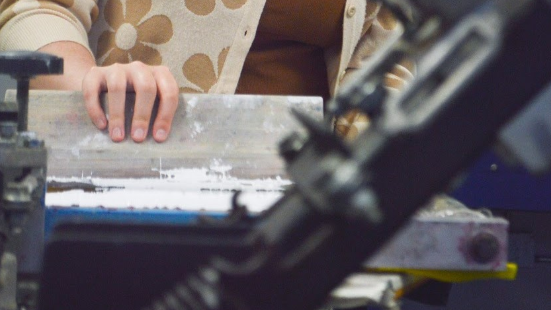
Year One begins the two-year commitment by introducing the graphic communications industry, print production, digital prepress, measurement, safety, and professional work habits. Students combine classroom study with hands-on Adobe and production projects.
Students focus on:
- Lab safety, equipment procedures, chemicals, and personal protection
- Graphic communications careers, products, printing methods, and workflows
- Digital prepress, file types, typography, layout, and proofreading
- Production math, proportions, percentages, and linear measurement
- Illustrator vector graphics and introductory Photoshop skills
Semester 2 | Developing Production Skills
Students build on Graphic Communications 1 through more detailed digital prepress, design, image capture, and commercial production work. They prepare files for specific output requirements, operate production equipment, and finish printed products. To advance to Year Two, students must demonstrate mastery of required skills and earn a grade of 75 or higher each quarter.
Students focus on:
- File management, preflighting, imposition, output, and quality control
- Applied math, typography, design principles, and page layout
- Photography, scanners, image capture, resolution, and file preparation
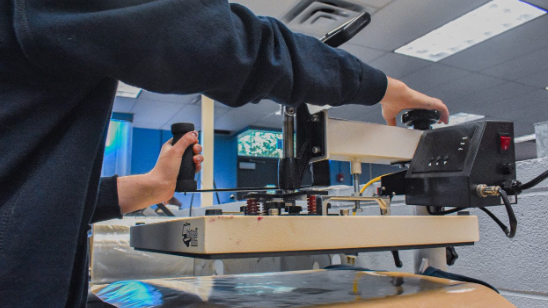
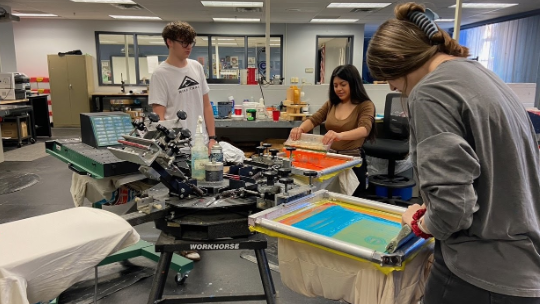
- Printing, screen printing, finishing, binding, cutting, and assembly
- Advanced Illustrator and Photoshop with introductory InDesign
Semester 3 | Advancing Production Skills
After completing Graphic Communications 1 and 2, students return for the second year of their two-year commitment. They study how color, substrates, inks, files, plates, equipment, and press settings work together to produce accurate and consistent printed products.
Students focus on:
- Color theory, separations, measurement, profiles, and color management
- Paper, plastics, weights, grades, coatings, and other substrates
- Ink properties, formulations, specialized inks, mixing, and quality
- Flexographic prepress, plates, press setup, registration, and production
- Continued Illustrator, Photoshop, InDesign, safety, and maintenance
Semester 4 | Preparing for the Industry
Students complete the honors-level program through advanced Adobe, portfolio, business, critique, and production projects. They work with greater independence while preparing for certification, technical college, four-year programs, entrepreneurship, and entry-level creative or production work.
Students focus on:
- Adobe certification preparation in Illustrator, Photoshop, and InDesign
- Professional work habits, collaboration, ethics, and changing technology
- Resumes, digital portfolios, networking, copyright, and entrepreneurship
- Project requirements, audience, accessibility, critique, and revision
- Digital, wide-format, sign, plotting, dye-sublimation, and specialty printing
Work-Based Learning
Eligible Year Two students may be recommended for Work-Based Learning or co-op opportunities with local design, printing, photography, marketing, and production businesses. These earned experiences allow students to apply their skills with an employer, gain professional experience, and potentially earn while they learn.
Placement is not guaranteed. Students must meet school eligibility requirements, and each sponsoring employer may establish additional expectations related to experience, certifications, attendance, portfolio quality, technical skill, and workplace readiness.
Industry Certifications
Students may pursue industry-recognized certifications as they progress through the program:
- Tier 1: OSHA 10-Hour
- Tier 2: Adobe Certified Professional credentials in approved applications
- Tier 3: Advanced Adobe or other approved industry certifications


Career Opportunities
Graphic Communications can lead to careers involving visual design, photography, commercial printing, branding, publishing, digital media, and production.
Graphic
Designer
Graphic designers create visual concepts for advertisements, publications, packaging, brands, websites, and social media. They combine design principles, software skills, audience needs, and client goals.
Commercial
Photographer
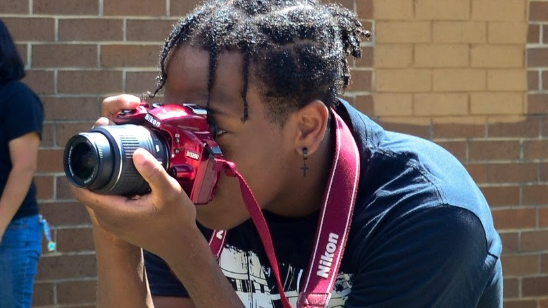
Commercial photographers use cameras, lighting, composition, and editing software to create images for products, advertising, portraits, events, publications, websites, and other digital media.
Printing Press
Operator
Press operators prepare, operate, monitor, and maintain commercial printing equipment. They evaluate registration, color, image quality, materials, settings, and consistency throughout production.
Production
Artist
Production artists prepare and revise artwork for final output. They check dimensions, color, fonts, images, file organization, technical specifications, and consistency before printing or publishing.

Visit the Program
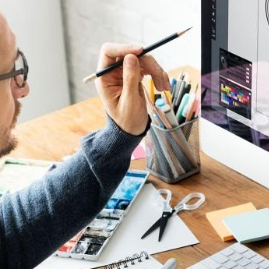
Students can explore the Graphic Communications lab and meet Mrs. Bennefield during scheduled school tours. Students and parents are also invited to visit the classroom during Enoree’s Fall Recruiting Open House and Lab-or-Treat in late October or our Spring Recruiting Open House in March. Visit the front page of our website or follow us on social media for event details as they become available.
A visit provides a closer look at the honors-level training, design software, cameras, printing equipment, production tools, and opportunities available throughout the two-year program. It also gives families an opportunity to ask questions and consider the student’s interest, schedule, transportation, attendance, academic readiness, and commitment to complete both years.
Local Work-Based Learning Partners
Local design, printing, photography, and production businesses help eligible Year Two students connect classroom instruction with professional projects and workplace expectations. Students may be recommended for Work-Based Learning after demonstrating the technical skill, creativity, maturity, dependability, and academic standing needed to represent themselves, Enoree Career Center, and the sponsoring employer well.

Two-year commitment note: This program is designed as one connected two-year experience. Year One develops the foundational skills students need for the advanced training, certifications, independence, and potential Work-Based Learning opportunities available during Year Two. New students enter only at the beginning of Year One and cannot join the program during Year Two. Because enrollment is limited, every accepted student fills a spot that cannot be offered to another interested student. If that student does not return for Year Two, the spot remains vacant and the opportunity is lost for both the student and someone who was prepared to complete the full program. Students who accept a spot should plan to complete both years, make the most of the opportunity, and follow through on their commitment.
Work-Based Learning note: Work-Based Learning is a culminating goal of each program, giving eligible students the opportunity to apply their technical skills in a real workplace. Placement is not guaranteed and must be earned by meeting program, school, and employer expectations. When available, Work-Based Learning may include paid on-the-job training and may lead to employment, tuition assistance, industry certifications, or continued education opportunities.
Graduation and college admission note: Students earn four high school credits each year and may earn up to eight credits by completing the full two-year program. These credits count toward South Carolina high school graduation requirements as applicable, and one credit may fulfill the state’s World Language or Career and Technology Elective requirement. Career center coursework generally does not replace the world-language coursework required for admission to four-year colleges and universities. Because graduation and college admission requirements may vary, students and families should work with both their home high school counselor and the Enoree Career Center counselor to ensure the student’s career center program, graduation plan, and future education goals remain aligned.