FIREFIGHTING
Instructor: Chief Scott Key
Visit Chief Key’s WebsitePrepare. Respond. Serve.
Could you see yourself answering the call when others need help? Firefighting gets you out of a traditional classroom and into realistic training, where teamwork, preparation, and responsibility matter. Whether you already have your sights set on the fire service or are just beginning to explore the career, this program gives you a place to challenge yourself and start building your future.
Firefighting is a two-year program with 20 total spots available each year across Berea, Carolina, Travelers Rest, and Wade Hampton High Schools. Choosing the program means planning to complete both years and make the most of this limited opportunity.
What Students Learn
Students develop practical emergency-response skills while building the technical foundation, physical readiness, and professional habits needed for continued fire-service education and careers.
- Use protective equipment: Inspect, wear, and operate turnout gear, respiratory protection, and self-contained breathing apparatus.
- Control and suppress fires: Deploy hoses, operate nozzles, establish water supplies, use extinguishers, and apply suppression methods.
- Perform rescue operations: Use ladders, ropes, forcible-entry tools, search procedures, victim-removal techniques, and vehicle-extrication equipment.
- Manage emergency hazards: Recognize changing fire conditions, building-collapse indicators, hazardous materials, and roadway or incident-scene risks.
- Support fire-service operations: Communicate through the chain of command, maintain equipment, preserve scenes, document incidents, and educate the public.
Is This Program Right for You?
Students should be ready to:
- Commit to completing both years of the program
- Attend regularly and arrive prepared to train
- Follow every safety direction and chain-of-command expectation
- Meet the program’s age and medical requirements
- Participate in demanding physical and team-based activities
- Remain calm, communicate clearly, and accept feedback
These habits help students succeed in training, advance to Year Two, pursue certifications, and compete for Work-Based Learning opportunities.
Program Eligibility
Students must be at least 16 years old by October 1 and must be able to pass the required medical examination. Additional eligibility, participation, transportation, and certification requirements will be reviewed with students and families.
Your Two-Year Firefighting Pathway
Each semester of the two-year commitment builds on the one before it, allowing students to develop stronger emergency-response skills, greater independence, and professional fire-service habits.
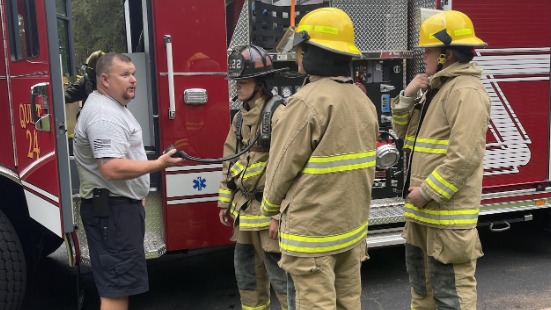
Semester 1 | Building the Foundation
Year One begins the two-year commitment with the first half of Firefighter 1. Students learn how the fire service is organized and develop the safety knowledge, communication skills, fire-behavior understanding, and equipment habits needed before moving into more complex emergency operations.
Students focus on:
- Fire-service mission, organization, safety, and accountability
- Emergency communications and radio procedures
- Building construction, fire dynamics, and changing fire conditions
- Turnout gear, SCBA, extinguishers, and respiratory safety
- Ropes, knots, ground ladders, and equipment care
Semester 2 | Developing Fireground Skills
Students complete Firefighter 1 by applying their foundation to increasingly complex fireground and hazardous-materials operations. They must communicate, work through the chain of command, and complete practical tasks carefully. To advance to Year Two, students must demonstrate mastery of required skills and earn a grade of 75 or higher each quarter.
Students focus on:
- Forcible entry, structural search, rescue, and victim removal
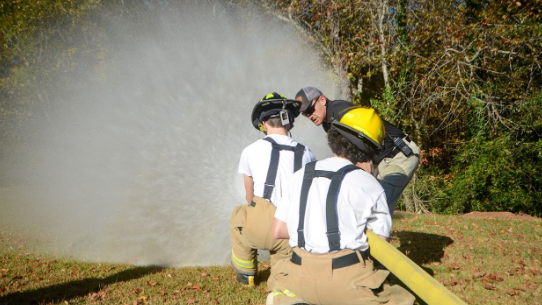
- Tactical ventilation, hose deployment, and water streams
- Structural, vehicle, exterior, and ground-cover fire suppression
- Overhaul, property conservation, scene preservation, and command
- Hazardous-materials awareness, operations, PPE, and decontamination
Semester 3 | Advancing Emergency Skills
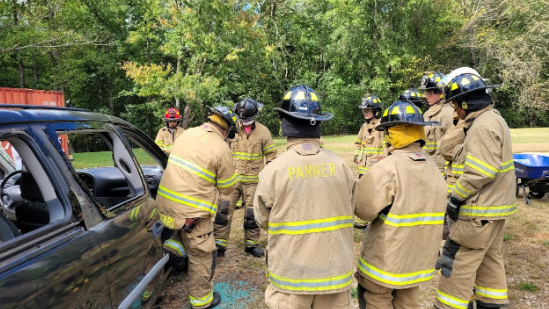
After completing both semesters of Firefighter 1, students return for the second year of their two-year commitment and begin Firefighter 2. They assess more complex hazards, support technical rescue and vehicle-extrication operations, and take greater responsibility during incident-scene training.
Students focus on:
- Fire effects on building materials and structural-collapse indicators
- Technical rescue duties, tools, hazards, and scene size-up
- Vehicle stabilization, victim access, and auto extrication
- Firefighting foam and liquid- and gas-fuel fires
- Incident operations, command transfer, team leadership, and reporting
Semester 4 | Preparing for the Fire Service
Students complete Firefighter 2 and the two-year program through advanced investigation, maintenance, public-safety, and incident-command responsibilities. They work with greater independence while preparing for certification testing, continued fire-service education, department training, and entry-level opportunities.
Students focus on:
- Fire origin, cause determination, and evidence preservation
- Equipment maintenance and fire-hose service testing
- Home fire-safety surveys and community risk reduction
- Pre-incident planning, public education, and documentation
- NIMS-ICS leadership, incident action plans, and certification preparation
Work-Based Learning
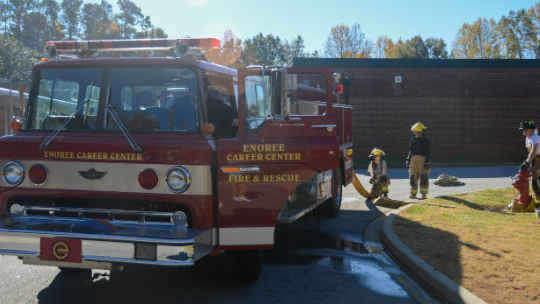
Eligible Year Two students may be recommended for Work-Based Learning opportunities with local fire departments. These earned experiences allow students to learn beside professional firefighters, observe department operations, apply workplace skills, and connect their training with community service.
Placement is not guaranteed. Students must meet school and department eligibility requirements, have reliable transportation when required, and satisfy any additional expectations related to age, medical clearance, certifications, attendance, maturity, and workplace readiness.
Industry Certifications
Students may pursue industry-recognized certifications as they progress through the program:
- Tier 1: OSHA 10-Hour
- Tier 2: First Aid, CPR and AED, Firefighter I, and Auto Extrication
- Tier 3: Firefighter II and hazardous-materials credentials
Important: Completing the Enoree courses alone does not automatically award national Firefighter I or Firefighter II certification. Students must meet all applicable South Carolina Fire Academy requirements and successfully complete separate certification testing.

Career Opportunities
Firefighting can lead to careers in municipal fire service, military fire protection, emergency response, fire prevention, inspection, training, and department leadership.
Municipal
Firefighter
Municipal firefighters respond to fires, medical emergencies, collisions, rescues, hazardous materials, and natural disasters. They inspect equipment, train regularly, maintain readiness, and support public-safety education.
Military
Firefighter
Military firefighters protect personnel, facilities, vehicles, aircraft, and equipment. They respond to structural fires, aircraft emergencies, hazardous materials, rescues, and other incidents on military installations.
Fire
Inspector
Fire inspectors examine buildings and systems for hazards, evaluate compliance with safety codes, review emergency plans, educate property owners, and help reduce community fire risk through prevention.
Fire Service
Officer
Fire service officers lead personnel, training, emergency operations, equipment readiness, and station activities. These leadership positions require fire-service experience, professional development, and additional certification.
Visit the Program
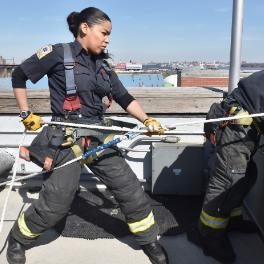
Students can explore the Firefighting training area and meet Chief Key during scheduled school tours. Students and parents are also invited to visit the classroom during Enoree’s Fall Recruiting Open House and Lab-or-Treat in late October or our Spring Recruiting Open House in March. Visit the front page of our website or follow us on social media for event details as they become available.
A visit provides a closer look at the hands-on training, protective gear, tools, equipment, and opportunities available throughout the two-year program. It also gives families an opportunity to ask questions and consider the student’s interest, schedule, transportation, attendance, physical readiness, eligibility, and commitment to complete both years.
Local Work-Based Learning Partners
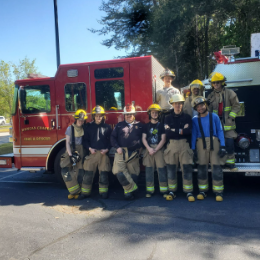
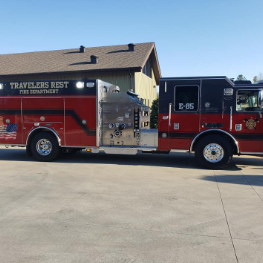
Local fire departments help eligible Year Two students connect classroom and practical instruction with professional emergency-service environments and community service. Students may be recommended for Work-Based Learning after demonstrating the technical skill, maturity, dependability, physical readiness, and academic standing needed to represent themselves, Enoree Career Center, and the sponsoring department well.
Two-year commitment note: This program is designed as one connected two-year experience. Year One develops the foundational skills students need for the advanced training, certifications, independence, and potential Work-Based Learning opportunities available during Year Two. New students enter only at the beginning of Year One and cannot join the program during Year Two. Because enrollment is limited, every accepted student fills a spot that cannot be offered to another interested student. If that student does not return for Year Two, the spot remains vacant and the opportunity is lost for both the student and someone who was prepared to complete the full program. Students who accept a spot should plan to complete both years, make the most of the opportunity, and follow through on their commitment.
Work-Based Learning note: Work-Based Learning is a culminating goal of each program, giving eligible students the opportunity to apply their technical skills in a real workplace. Placement is not guaranteed and must be earned by meeting program, school, and employer expectations. When available, Work-Based Learning may include paid on-the-job training and may lead to employment, tuition assistance, industry certifications, or continued education opportunities.
Certification and college-credit note: Course completion alone does not award national Firefighter I or Firefighter II certification. Separate testing and all applicable South Carolina Fire Academy requirements must be completed.
Graduation and college admission note: Students earn four high school credits each year and may earn up to eight credits by completing the full two-year program. These credits count toward South Carolina high school graduation requirements as applicable, and one credit may fulfill the state’s World Language or Career and Technology Elective requirement. Career center coursework generally does not replace the world-language coursework required for admission to four-year colleges and universities. Because graduation and college admission requirements may vary, students and families should work with both their home high school counselor and the Enoree Career Center counselor to ensure the student’s career center program, graduation plan, and future education goals remain aligned.