BUILDING CONSTRUCTION
Instructor: Mr. Jay Adam Pearson
Visit the Teacher WebsitePlan. Build. Create.
Want to build something real and see your progress take shape? Building Construction gets you out of a traditional classroom and into the lab, where you will take on real projects and face the kinds of challenges construction professionals handle every day. Whether you already have experience building things or are ready to learn from the beginning, this program gives you a place to start building your future.
Building Construction is a two-year program with 20 total spots available each year across Berea, Carolina, Travelers Rest, and Wade Hampton High Schools. Choosing the program means planning to complete both years and make the most of this limited opportunity.
What Students Learn
Students develop practical construction skills they can use to complete projects today while building the technical foundation needed for future education and careers in the construction industry.
- Read and apply construction plans: Interpret drawings, dimensions, symbols, specifications, and building requirements.
- Measure and lay out projects: Use construction math and layout tools to plan accurate cuts, walls, floors, roofs, and other components.
- Operate construction tools: Select, use, inspect, and maintain hand tools, power tools, and equipment for specific tasks.
- Build structural systems: Construct and finish floor, wall, ceiling, roof, masonry, stair, and cabinet projects.
- Install building systems: Complete introductory residential electrical and plumbing tasks using approved codes and procedures.
Is This Program Right for You?
Students should be ready to:
- Commit to completing both years of the program
- Attend regularly and arrive prepared to work
- Follow all lab and job-site safety procedures
- Measure carefully and pay attention to details
- Work as part of a team and accept feedback
- Take increasing responsibility as skills grow
These habits help students succeed in the lab, advance to Year Two, earn certifications, and compete for Work-Based Learning opportunities.
Your Two-Year Building Construction Pathway
Each semester of the two-year commitment builds on the one before it, allowing students to develop stronger technical skills, greater independence, and professional workplace habits.
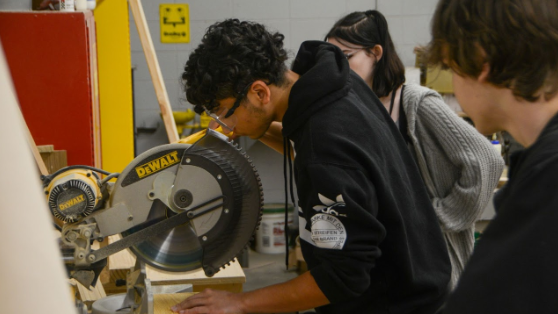
Semester 1 | Building the Foundation
Year One begins the two-year commitment and helps students turn an interest in construction into real technical skills through classroom instruction, hands-on projects, and NCCER Core training. The program is open to rising 10th- and 11th-grade students who are prepared to complete both years.
Students focus on:
- Construction careers and professional responsibilities
- Job-site safety, PPE, and hazard recognition
- Construction math, measurement, and layout
- Safe use and care of hand and power tools
- Construction drawings, communication, and teamwork
Semester 2 | Developing Building Skills
Students take on more challenging projects as they apply accurate measurements, interpret plans, estimate materials, and combine tools and techniques to build structural components. To advance to Year Two, students must demonstrate mastery of required skills and earn a grade of 75 or higher each quarter.
Students focus on:
- Masonry materials, mortar, brick, and block installation
- Floor-system plans, components, framing, and material estimates
- Wall layout, framing, bracing, and openings
- Drywall installation and finishing procedures
- Project accuracy, organization, and quality checks
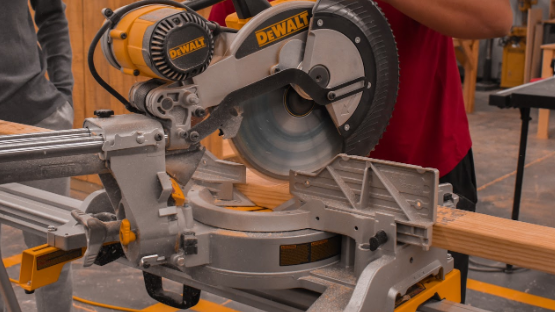
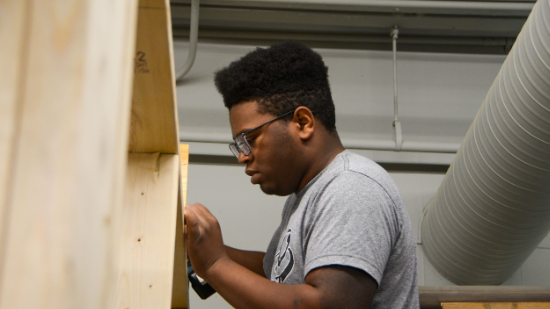
Semester 3 | Advancing Technical Skills
After completing Building Construction 1 and 2, students return for the second year of their two-year commitment. They build and finish more complex systems, work with greater precision, and may become eligible for Work-Based Learning or co-op opportunities.
Students focus on:
- Ceiling systems, roof framing, rafters, and trusses
- Roofing tools, materials, installation, and estimating
- Exterior finishes and weather-resistant applications
- Stair calculations, stringers, risers, and treads
- Cabinet construction, finishing, and installation
Semester 4 | Preparing for the Industry
Students complete the two-year program by applying multiple construction skills to advanced projects and building systems. They work with greater independence while preparing for technical college, apprenticeships, entry-level employment, and other opportunities in the construction industry.
Students focus on:
- Electrical safety, residential circuits, and code references
- Drain, waste, and vent system fundamentals
- Measuring, cutting, joining, and supporting pipe
- Safe operation of construction equipment and simulators
- Integrated projects, planning, leadership, and workplace readiness
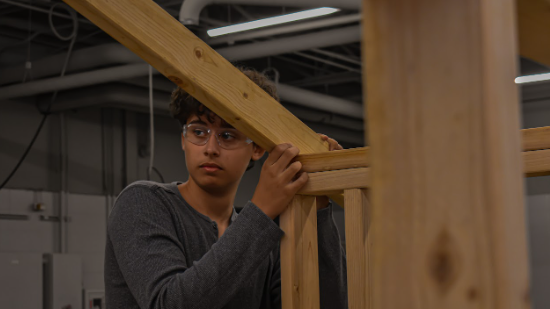
Work-Based Learning
Eligible Year Two students may be recommended for Work-Based Learning or co-op opportunities with local contractors, construction companies, and maintenance departments. These earned experiences allow students to apply their skills with an employer, gain on-the-job experience, and potentially earn while they learn.
Placement is not guaranteed. Students must meet school eligibility requirements, and each sponsoring employer may establish additional expectations related to age, experience, certifications, attendance, and workplace readiness.
Industry Certifications
Students may pursue industry-recognized certifications as they progress through the program:
- Tier 1: OSHA 10-Hour General Industry
- Tier 2: NCCER Core and CTECS Building Construction

Career Opportunities
Building Construction can lead to careers involving skilled trades, equipment operation, project planning, site supervision, and construction management.
Construction
Carpenter
Construction carpenters read plans and measure, cut, assemble, install, and repair building materials. Their work may include framing, doors, cabinets, trim, flooring, and structural or finish components.
Masonry
Technician
Masonry technicians use plans, measurements, mortar, brick, block, and other materials to build and repair walls and structures. Their work requires careful layout, consistent technique, and attention to safety.
Equipment
Operator
Equipment operators safely control machinery used to move materials, prepare sites, grade land, and support building projects. The work requires coordination, awareness, equipment knowledge, and careful communication.
Construction
Manager
Construction managers coordinate schedules, materials, budgets, contractors, safety expectations, and project progress. They help move work from planning through completion while meeting quality and deadline requirements.

Visit the Program
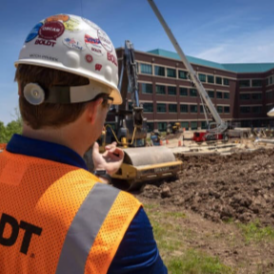
Students can explore the Building Construction lab and meet Mr. Pearson during scheduled school tours. Students and parents are also invited to visit the classroom during Enoree’s Fall Recruiting Open House and Lab-or-Treat in late October or our Spring Recruiting Open House in March. Visit the front page of our website or follow us on social media for event details as they become available.
A visit provides a closer look at the hands-on training, tools, equipment, projects, and opportunities available throughout the two-year program. It also gives families an opportunity to ask questions and consider the student’s interest, schedule, transportation, attendance, and readiness to complete both years.
Local Work-Based Learning Partners
Local employers help eligible Year Two students connect classroom and lab instruction with professional construction, maintenance, and project-based workplace experiences. Students may be recommended for Work-Based Learning or co-op after demonstrating the technical skill, maturity, dependability, and academic standing needed to represent themselves, Enoree Career Center, and the sponsoring employer well.



Two-year commitment note: This program is designed as one connected two-year experience. Year One develops the foundational skills students need for the advanced training, certifications, independence, and potential Work-Based Learning opportunities available during Year Two. New students enter only at the beginning of Year One and cannot join the program during Year Two. Because enrollment is limited, every accepted student fills a spot that cannot be offered to another interested student. If that student does not return for Year Two, the spot remains vacant and the opportunity is lost for both the student and someone who was prepared to complete the full program. Students who accept a spot should plan to complete both years, make the most of the opportunity, and follow through on their commitment.
Work-Based Learning note: Work-Based Learning is a culminating goal of each program, giving eligible students the opportunity to apply their technical skills in a real workplace. Placement is not guaranteed and must be earned by meeting program, school, and employer expectations. When available, Work-Based Learning may include paid on-the-job training and may lead to employment, tuition assistance, industry certifications, or continued education opportunities.
Graduation and college admission note: Students earn four high school credits each year and may earn up to eight credits by completing the full two-year program. These credits count toward South Carolina high school graduation requirements as applicable, and one credit may fulfill the state’s World Language or Career and Technology Elective requirement. Career center coursework generally does not replace the world-language coursework required for admission to four-year colleges and universities. Because graduation and college admission requirements may vary, students and families should work with both their home high school counselor and the Enoree Career Center counselor to ensure the student’s career center program, graduation plan, and future education goals remain aligned.