AUTOMOTIVE TECHNOLOGY
Instructor: Mr. Tavis Lydic
Visit the Teacher WebsiteDiagnose. Repair. Perform.
Want to know what it takes to turn an interest in cars into a career? Automotive Technology gets you out of a traditional classroom and into the shop, where you will work with real vehicles and face the same kinds of challenges automotive professionals handle every day.
Whether you already know your way around a car or are ready to learn from the beginning, this program gives you a place to start building your future.
Automotive Technology is a two-year program with 20 total spots available each year to students from Berea, Carolina, Travelers Rest, and Wade Hampton High Schools. Choosing the program means planning to complete both years and make the most of this limited opportunity.
What Students Learn
Students develop practical automotive skills they can use to maintain their own vehicles today while building the technical foundation needed for future education and careers in the automotive industry.
- Perform routine maintenance: Change oil, replace filters, check fluids, and complete vehicle inspections.
- Service major vehicle systems: Inspect, maintain, and repair brakes, steering, suspension, and engine components.
- Diagnose vehicle problems: Use scan tools, technical information, and systematic testing to identify possible causes.
- Test electrical systems: Use multimeters and other equipment to test batteries, wiring, sensors, and computer-controlled components.
- Complete repairs: Use automotive tools and equipment to remove, replace, adjust, and verify vehicle components.
Is This Program Right for You?
Students should be ready to:
- Commit to completing both years
- Attend regularly and arrive prepared
- Follow all shop safety procedures
- Work carefully and stay organized
- Solve problems and accept feedback
- Take increasing responsibility for their work
These habits help students succeed in the lab, advance to Year Two, earn certifications, and compete for Work-Based Learning opportunities.
Your Two-Year Automotive Technology Pathway
Each semester of your two-year commitment builds on the one before it, allowing students to develop stronger technical skills, greater independence, and professional workplace habits.
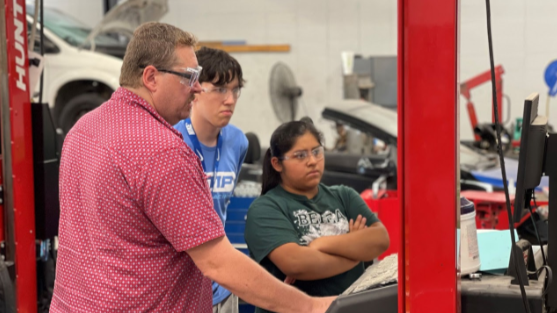
Semester 1 | Building the Foundation
Year One begins the two-year commitment and helps students turn an interest in vehicles into real technical skills through classroom instruction, hands-on lab experiences, and real-world training. The program is open to rising 10th- and 11th-grade students who are prepared to complete both years.
Students focus on:
- Identifying major vehicle systems and using common automotive tools
- Performing walk-around and multipoint vehicle inspections
- Checking fluids, tires, lights, wipers, belts, and hoses
- Changing engine oil and filters using manufacturer specifications
- Finding basic service information and documenting inspection results
Semester 2 | Developing Diagnostic Skills
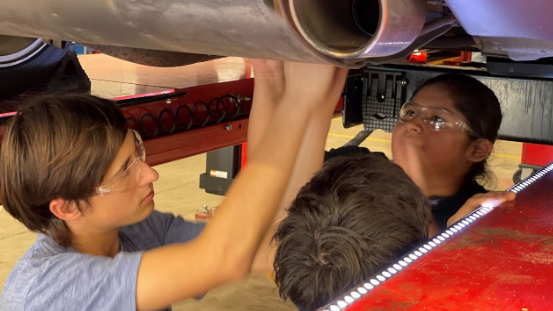
Students take on more challenging work as they diagnose and repair more complex systems, use advanced equipment, and follow procedures used in professional automotive shops. To advance to Year Two, students must demonstrate mastery of required skills and earn a grade of 75 or higher each quarter.
Students focus on:
- Inspecting and servicing brakes, steering, suspension, wheels, and tires
- Testing batteries and starting and charging systems
- Measuring electrical circuits and locating basic faults
- Servicing cooling systems and completing common maintenance procedures
- Using technical information to select and complete the correct service procedure
Semester 3 | Advancing Technical Skills
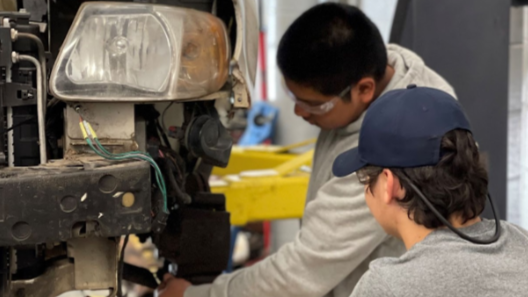
After completing Automotive Technology 1 and 2, students return for the second year of their two-year commitment. They build on their Year One skills, complete more advanced work, and may become eligible for Work-Based Learning or co-op opportunities.
Students focus on:
- Retrieving and interpreting trouble codes, freeze-frame data, and scan-tool results
- Diagnosing engine performance, ignition, fuel, and emissions concerns
- Inspecting and servicing transmission, drivetrain, and axle components
- Testing HVAC, electrical, and computer-controlled systems
- Troubleshooting hybrid and electric vehicle components and systems
Semester 4 | Preparing for the Industry
Students complete the two-year program through advanced diagnostic, maintenance, and repair projects. They work with greater independence while preparing for technical college, apprenticeships, entry-level employment, and other opportunities in the automotive industry.
Students focus on:
- Planning and completing multistep diagnostic and repair projects
- Analyzing symptoms, testing possible causes, and verifying repairs
- Diagnosing advanced electrical, electronic, and hybrid vehicle systems
- Completing complex service and repair procedures with greater independence
- Documenting completed work and confirming that vehicles operate correctly
Work-Based Learning
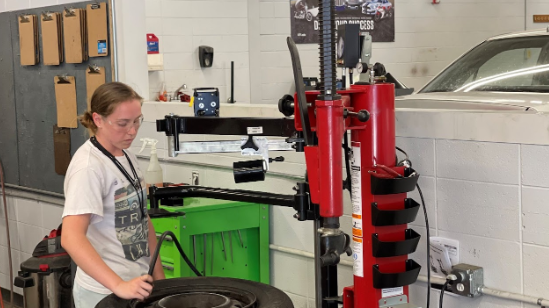
Eligible Year Two students may be recommended for Work-Based Learning or co-op opportunities with local dealerships and repair facilities. These earned experiences allow students to apply their skills with an employer, gain on-the-job experience, and potentially earn while they learn.
Placement is not guaranteed. Students must meet school eligibility requirements, and each sponsoring company may establish additional expectations related to age, experience, certifications, attendance, and workplace readiness.
Industry Certifications
Students may pursue industry-recognized certifications as they progress through the program:
- Tier 1: OSHA 10-Hour General Industry
- Tier 2: ASE Entry-Level certifications and Multimeter
- Tier 3: Section 609 Refrigerant Recovery and Recycling
Career Opportunities
Automotive Technology can lead to careers involving maintenance, diagnostics, repair, customer service, shop operations, and technical leadership.
Automotive
Technician
Automotive technicians inspect, maintain, diagnose, and repair vehicle systems. They use technical information, professional tools, and diagnostic equipment to identify problems, complete repairs, and help keep vehicles operating safely, efficiently, and reliably for customers.
Diagnostic
Technician
Diagnostic technicians use scan tools, electrical testing equipment, and technical information to identify the source of vehicle problems. They follow systematic troubleshooting procedures to evaluate performance, electrical, and mechanical systems and recommend the repairs needed.
Lead
Technician
Lead technicians complete advanced repairs, review diagnostic findings, and assist other technicians with difficult vehicle problems. They also help manage workflow, verify completed work, and support the quality, efficiency, and safety standards of an automotive service department.
Service
Advisor
Service advisors communicate with customers, document vehicle concerns, and explain recommended maintenance and repairs. They prepare repair orders, coordinate work with technicians, provide service updates, and help customers understand the work needed to keep their vehicles dependable.
Visit the Program
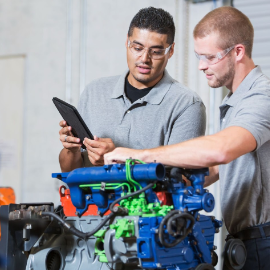
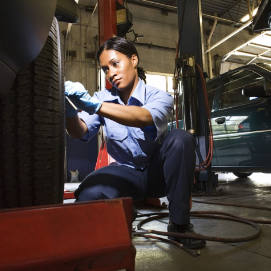
Students can explore the Automotive Technology lab and meet Mr. Lydic during scheduled school tours. Students and parents are also invited to visit the classroom during Enoree’s Fall Recruiting Open House and Lab-or-Treat in late October or our Spring Recruiting Open House in March. Visit the front page of our website or follow us on social media for event details as they become available.
A visit provides a closer look at the hands-on training, tools, vehicles, and opportunities available throughout the two-year program. It also gives families an opportunity to ask questions and consider the student’s interest, schedule, transportation, attendance, and readiness to complete both years.
Local Work-Based Learning Partners
Local employers help eligible Year Two students connect classroom and lab instruction with professional automotive workplace experiences. Students may be recommended for Work-Based Learning or co-op after demonstrating the technical skill, maturity, dependability, and academic standing needed to represent themselves, Enoree Career Center, and the sponsoring employer well.


Two-year commitment note: This program is designed as one connected two-year experience. Year One develops the foundational skills students need for the advanced training, certifications, independence, and potential Work-Based Learning opportunities available during Year Two. New students enter only at the beginning of Year One and cannot join the program during Year Two. Because enrollment is limited, every accepted student fills a spot that cannot be offered to another interested student. If that student does not return for Year Two, the spot remains vacant and the opportunity is lost for both the student and someone who was prepared to complete the full program. Students who accept a spot should plan to complete both years, make the most of the opportunity, and follow through on their commitment.
Work-Based Learning note: Work-Based Learning is a culminating goal of each program, giving eligible students the opportunity to apply their technical skills in a real workplace. Placement is not guaranteed and must be earned by meeting program, school, and employer expectations. When available, Work-Based Learning may include paid on-the-job training and may lead to employment, tuition assistance, industry certifications, or continued education opportunities.
Graduation and college admission note: Students earn four high school credits each year and may earn up to eight credits by completing the full two-year program. These credits count toward South Carolina high school graduation requirements as applicable, and one credit may fulfill the state’s World Language or Career and Technology Elective requirement. Career center coursework generally does not replace the world-language coursework required for admission to four-year colleges and universities. Because graduation and college admission requirements may vary, students and families should work with both their home high school counselor and the Enoree Career Center counselor to ensure the student’s career center program, graduation plan, and future education goals remain aligned.